

Aging Well Is About Purpose
Ishimoto-san's kancha tea update

In 2024, I travelled to Kuo village in Tokushima prefecture to meet Ishimoto-san, who is the last commercial producer of kancha (冬茶), or winter tea. She had announced towards the end of 2023 that it would be her final season making tea. My friend, who owns a tea shop in Canada, wanted to document her tea-making process (presumably for the last time). Since my friend knew that I lived relatively nearby and I could likely be of help, invited us to join.
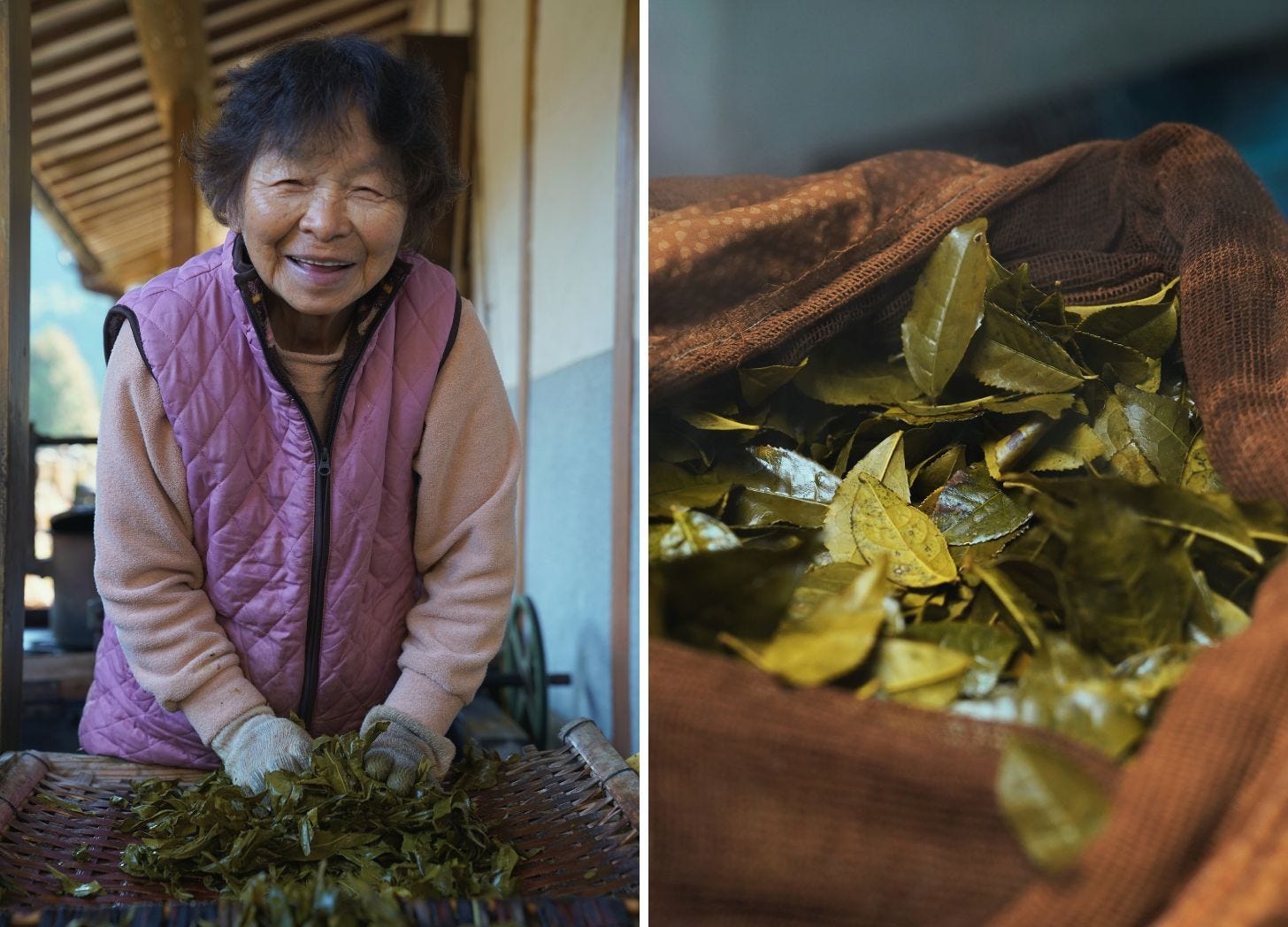
I had never heard of kancha before the first trip in 2023. Since I make a rare tea of my own in my village (awa bancha), I was drawn to the question of why a tea like this ends up carried by a single woman. What does it mean when one farmer becomes the last thread of something?
Japan is home to a wide range of folk teas, most grouped loosely under the word bancha—a term associated with ordinary, inexpensive tea. But many of these “ordinary” teas have been made for generations, shaped by specific villages and lived wisdom passed through the generations.
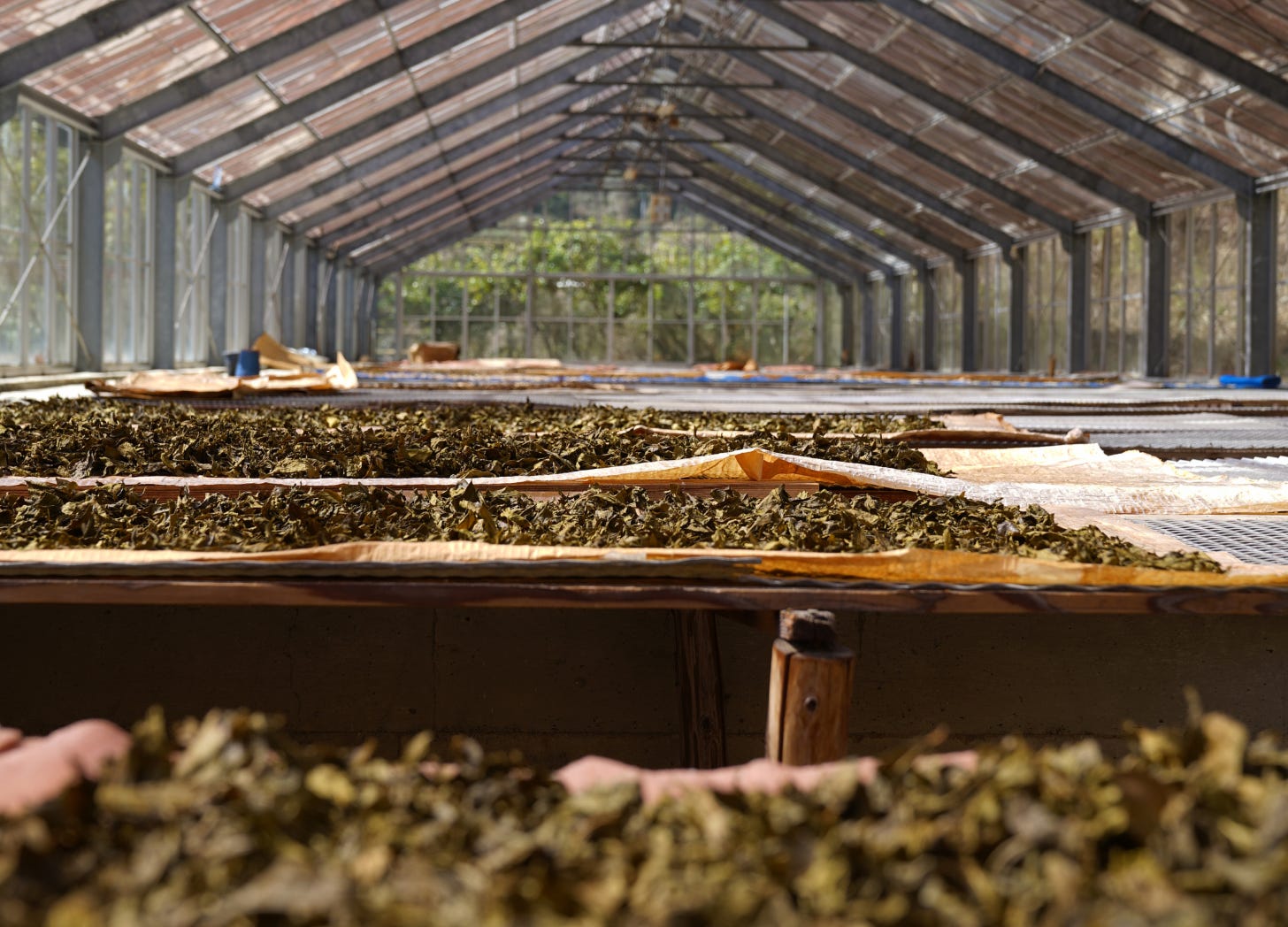
“The last of” or “disappearing”, words like that make me think of extinction, which is so grave and final. It’s tragic to think of something crossing a boundary that can’t be uncrossed. I’m so worried for the day my tea (awa bancha) might also be on the brink of not existing.
Teas like kancha are tethering on not being made as supply chains widen and cheapen, as markets drive prices down, as the people who made them age without anyone to pass the practice to. Without being valued beyond the village, it's nearly impossible to continue.
Unexpected News
I wish this year’s update were simple. If it were a simple update, it would go something like this: here is a strong 89-year-old woman who, despite her age, keeps making tea. She presses on and amazes people with her warm smile and her resolve to keep making kancha.
That is, only in part, true because the more nuanced reality is that each passing year makes it harder for her to continue. I don’t think she spoke lightly when she told us in 2023 that she was strongly considering that year to be her last. Even if a part of her thought she might continue anyway, that kind of reckoning about an ending must have been hard to admit (especially to a bunch of strangers back then).
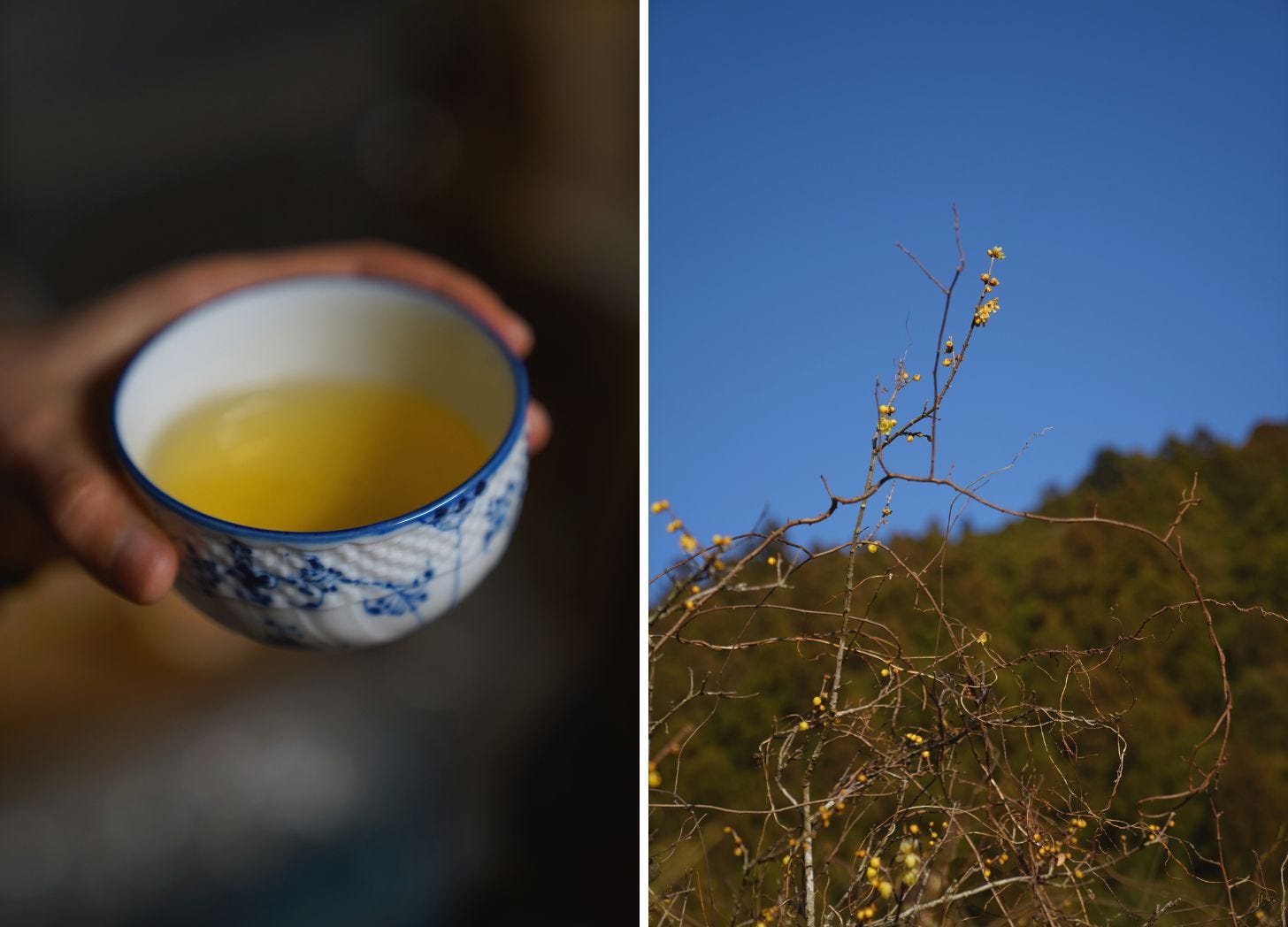
As we were driving to Kuo village this winter, we were about 30 minutes away when an urgent message came through from my friend, who had arrived half a day earlier. He told me that Ishimoto-san’s sister, who lived in the city, had just passed away. She wouldn’t be making tea that day, and likely not in the days ahead and would need to be in charge of funeral proceedings.
I sat with the message in the parking lot of the last combini convenience store on the drive before turning into the mountain road towards her village. I was unsure whether we should keep driving or turn around. We were so close, and I wanted to at least see her.
I called her right away and just before the call, I asked my Japanese friend in the car what the right thing to say was in this situation when someone you know has lost someone. She gave me a phrase that was so formal and unfamiliar that the moment Ishimoto-san picked up her phone, I had completely forgotten it. I just kept saying I’m sorry.
I don't think most of us talk about death enough to know what to say when it arrives. Probably the most honest thing, and maybe the most comforting, is to admit you simply don't have the words.
As I was fumbling with my own words, Ishimoto-san seemed steadier than I was. She was very old, she said. There was sadness in her voice, but also something like acceptance. I felt the hesitation of not knowing whether she wanted company or space, but I asked if I could still come visit her. And she said, of course you should come.
Not Ready To Quit
A few weeks earlier, when I first called Ishimot-san to arrange the visit, she had said (half jokingly) that she had been waiting for me to come, and that she was sad I hadn’t visited yet. My heart swelled and ached at the same time.
I wanted her to know that I remembered her. That I cared about her. That what she was doing felt genuinely inspiring to me.
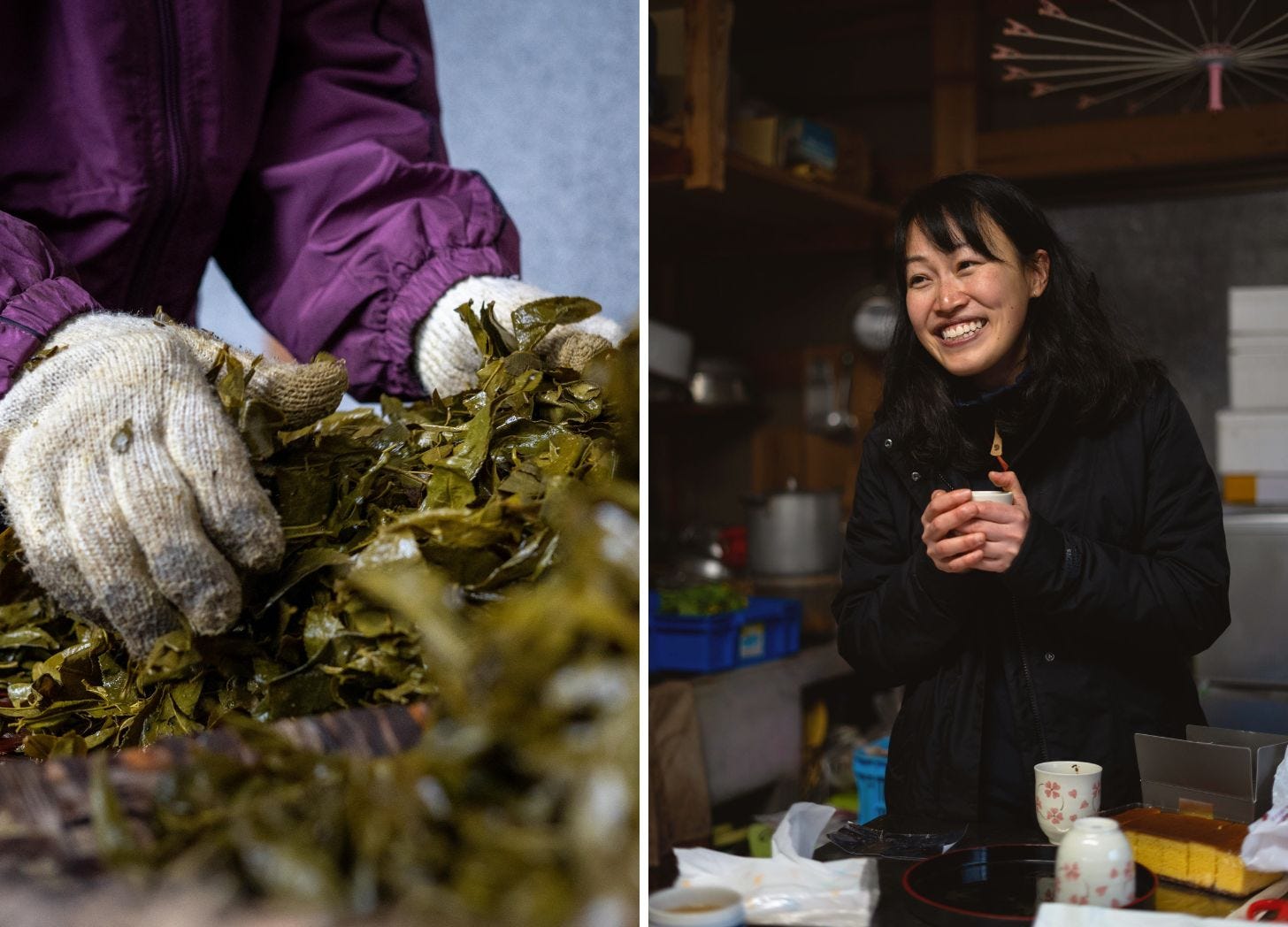
Her story, as it has unfolded across several visits, is the story of a person becoming who she wanted to be, in spite of much of her early life feeling constrained. She had responsibilities to her husband, her mother-in-law, and work as a seamstress, which she did because that was the only available work to women at the time. Then she found tea. She described it as becoming a new person in her 40s. Tea gave her purpose—a reason to wake up in the morning.
In the years after discovering she could make and sell tea for a living, she stepped into newfound freedom and independence. She started to build a small community of tea farmers (co-op) and shared her purpose with many people in the village. Then, over the years, she watched those farmers stop, one by one, until she was the only one left.
I think the thing that gives you the most hope and meaning is, by the same measure, the hardest thing to walk away from. Tea has folded into her identity. It gives shape to her days and her thoughts. When you redefine yourself (at any age), that feels like a gift too precious to set down.
What I’m most scared of is that something will happen to Ishimoto-san and I won’t know. Just to check in with her, I’ve personally resolved to call her periodically. She’s not one for chit-chat, so I may need excuses at first, like asking how much tea supply she has left, mentioning that a friend I gifted her tea to really loved it. But I hope that over time, I can simply be a listening ear.
I’m not ready to part with kancha. I hope to keep making it alongside her for many winters to come.
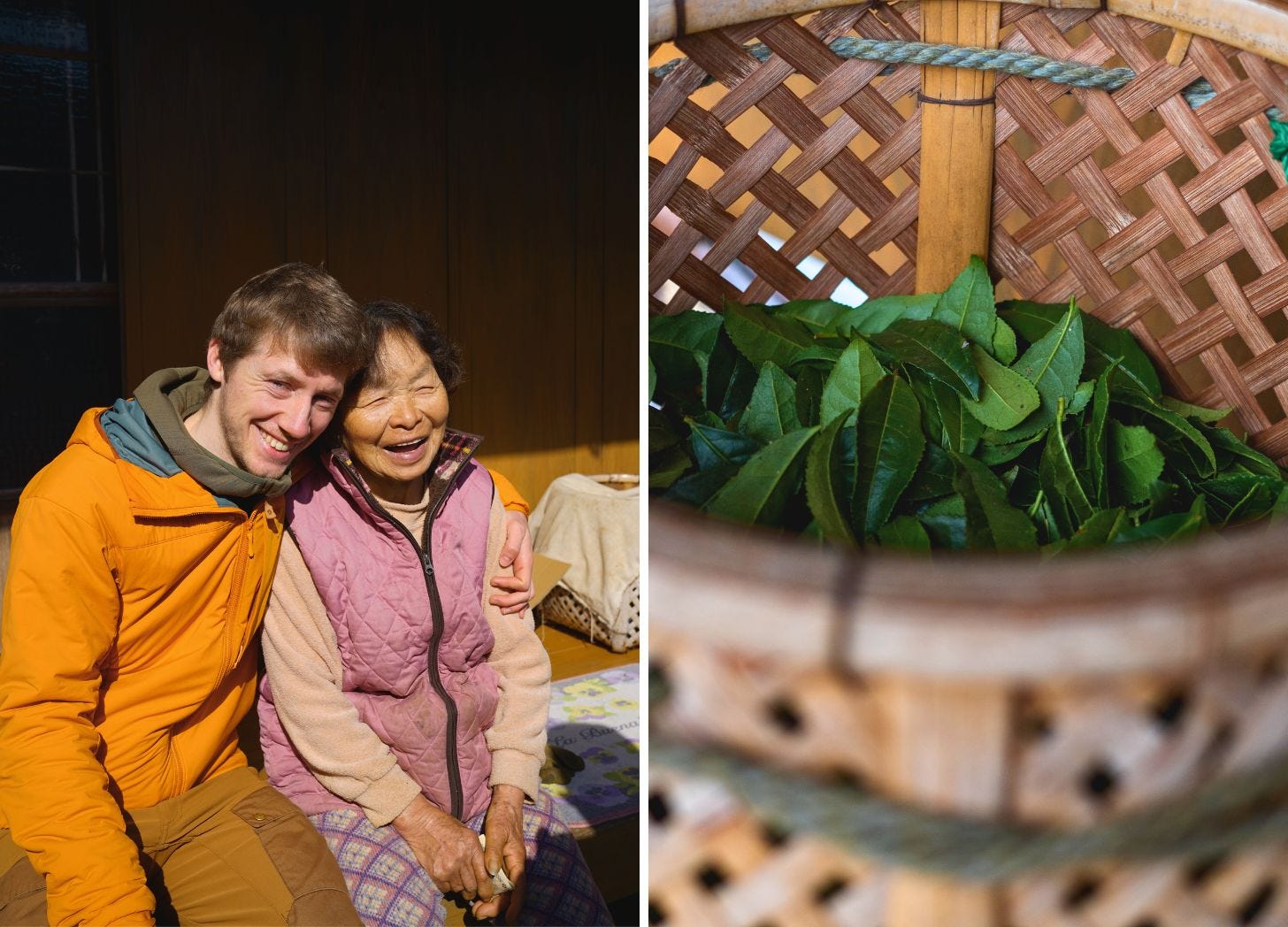

Thank you for reading! I feel that many people here are interested in Ishimoto-san’s story, and many of you have started to follow my Substack because of my story of her last year. If you’ve followed since then, thank you again!
PS. A reader noted that in a world obsessed with avoiding aging (through skincare, medicine, and whatever else promises we’re being sold), having purpose might be the most overlooked answer to longevity. I think about that when I reflect on Ishimoto-san—she keeps her mind and body healthy as she ages by staying active with making tea, but more than that, her purpose gives her joy and a reason to wake up. That’s food for thought!
Thank you, Kana. I found this piece deeply moving. It describes a kind of radical fidelity to life, to purpose that is so difficult to maintain in the narrowing demands of capitalism. It is full of beauty and purpose and food for thought for my own heart. Thank you.
Thank you for this beautiful story---and the lovely photographs. There is so much sweetness in aging as well as hardship.